There’s a quote by Ken Griffey Jr. which has always stuck with me:
“Just because I made it look easy doesn’t mean that it was.”
This quote applies to many situations, but especially to the towing and recovery industry. From the outside, it may seem simple: big trucks, a few straps, and some elbow grease. It looks like a straightforward job. The reality is very different. Even routine tows require calculations, safety protocols, and deep operational knowledge. What the public sees is only a small part of the work. Behind the scenes, every move can impact time, cost, safety, and lives.
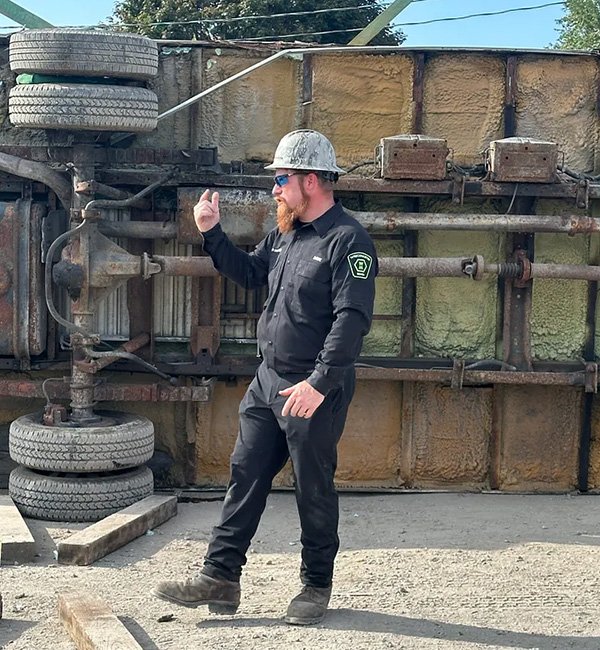
Dave Shambaugh of Shambaugh’s Towing in Titusville, PA
As I’ve learned more about the complexity of this industry, my desire to experience hands-on training has only grown. Fortunately, there are several outstanding organizations offering high-quality instruction. WreckMaster, ERSCA, and the American Towing and Recovery Institute are just a few of the groups that have committed themselves to improving standards across the industry through education and leadership.
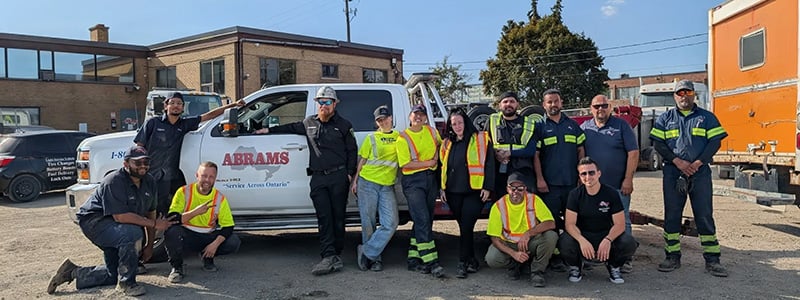
So when I had the chance to complete a WreckMaster course, I didn’t hesitate. Their trainers are always extremely articulate, patient, professional, and sharply dressed. They also happen to be some of the most experienced operators in the field. The training was hosted at Abrams Towing, a company I’ve worked with for years and deeply respect which made the experience even more meaningful.
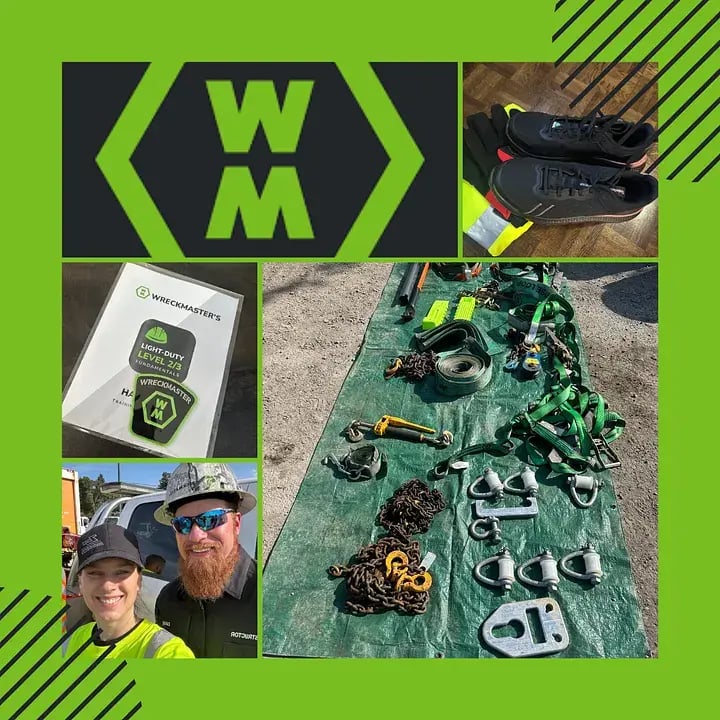
Our instructor Dave Shambaugh and I, our course material, composite toe boots and our equipment
Day One: Classroom Learning That Matters
We began in the classroom, but this was not a typical lecture. Dave Shambaugh of Shambaugh’s Towing in Titusville, PA, led our instruction. My classmates included staff from all areas of Abrams: safety and compliance, accounting, light-duty and heavy-duty operators, and several mechanics. Some had been towing for years and were there to refresh their skills. Others, like me, had been part of the industry for a long time but mostly from behind a desk.
Over the course of the first day, we focused on the essential inputs that go into nearly every recovery. Safety came first. We covered pre-shift equipment inspections, proper uniforms, and securing roadside scenes. Each detail matters. Every habit, every checklist, and every piece of preparation is critical when working next to live lines of traffic.
We then dove into the math. This was not just theory. It was real-world problem-solving. We worked through towing capacity, force calculations for moving or flipping vehicles, and the science behind anchor points. Everyone pulled out their calculators and notebooks, solving problems on paper that directly apply in the field.
We also spent time understanding the tools themselves. We reviewed hooks, chains, winches, and straps. Knowing the working load limits of your gear is essential. But it goes deeper than that. We explored the differences between wire rope and fiber core, when to use one tool instead of another, and how each decision can affect both performance and safety. This part of the training really emphasized that it is not enough to own the right equipment. You have to understand how and why to use it.
Day Two: Hands On and In the Field
The second day was held outdoors, and we were fortunate to have perfect weather. Wearing safety boots, high visibility vests, and gloves tucked into our pockets, we got to work.
We began with traditional wreckers and flatbeds, walking through loading and unloading procedures. I had the chance to operate the flatbed controls, balancing winch speed with the angle of the bed to slowly and safely unload a vehicle. It was a reminder of how much finesse and control is required, especially when you’re managing risk on busy roadways.
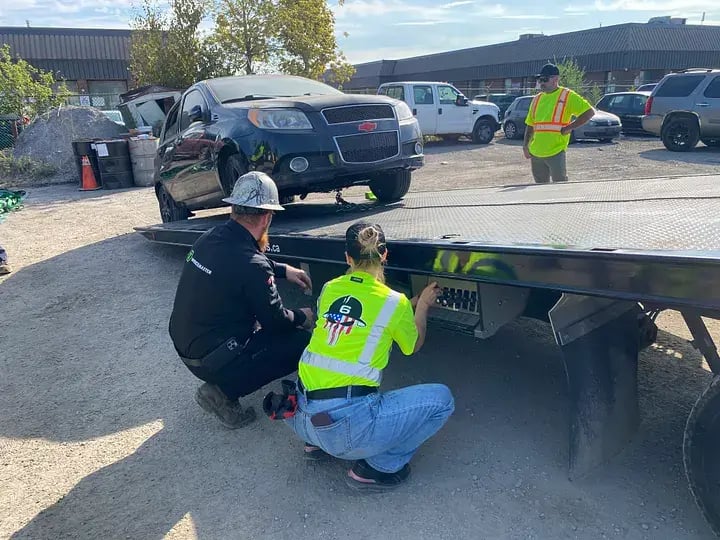
Unloading a vehicle from a flatbed tow truck
Then we pulled out the forklift and flipped a car onto its roof. We used only the tools we would have on the side of the road. A winch, snatch blocks, and chains were all we needed to get the job done. The setup took time, planning, and communication. I tried to imagine doing the same task in the rain or snow with traffic flying past, and it gave me a new level of respect for the professionals who handle these scenes every day.
Later, we worked with dollies, practiced proper strapping techniques, and focused on calculated, precise movements. Safety never happens by accident. Every step was intentional. Every setup was reviewed and executed with care.
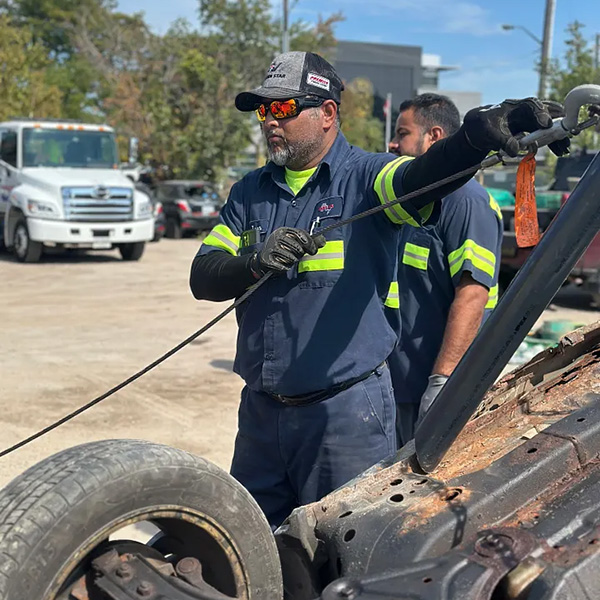
Working with Leon to flip a car back over
Our final challenge was the most demanding. We had to flip a box truck onto its side and then return it safely to its wheels. This required full team coordination. Line angles had to be exact. Strap placement had to be deliberate. Vehicle position was crucial. Every small detail made a difference.
We took our time getting everything in position. As the straps tightened and the tension increased, the entire group went quiet. We held our breath. Then, in a clean, smooth movement, the truck rolled back onto its wheels. It worked exactly as we had planned. No mistakes. No shortcuts. Just well-trained people using good communication and solid fundamentals.
After the exercise, we cleaned up the yard. Chains, straps, snatch blocks, dollies, and every tool we used were packed away properly. My shirt was soaked in sweat and stained with grease. My pants were covered in dust. My arms and neck were sunburned, and my hands were sore from the weight of the chains. But I felt proud. It was exhausting, but it was also incredibly rewarding.
What I Took Away
This training wasn’t just about technique. It was a reminder of the physical, mental, and emotional effort that goes into every recovery. I left with even more respect for the men and women who do this work every day.
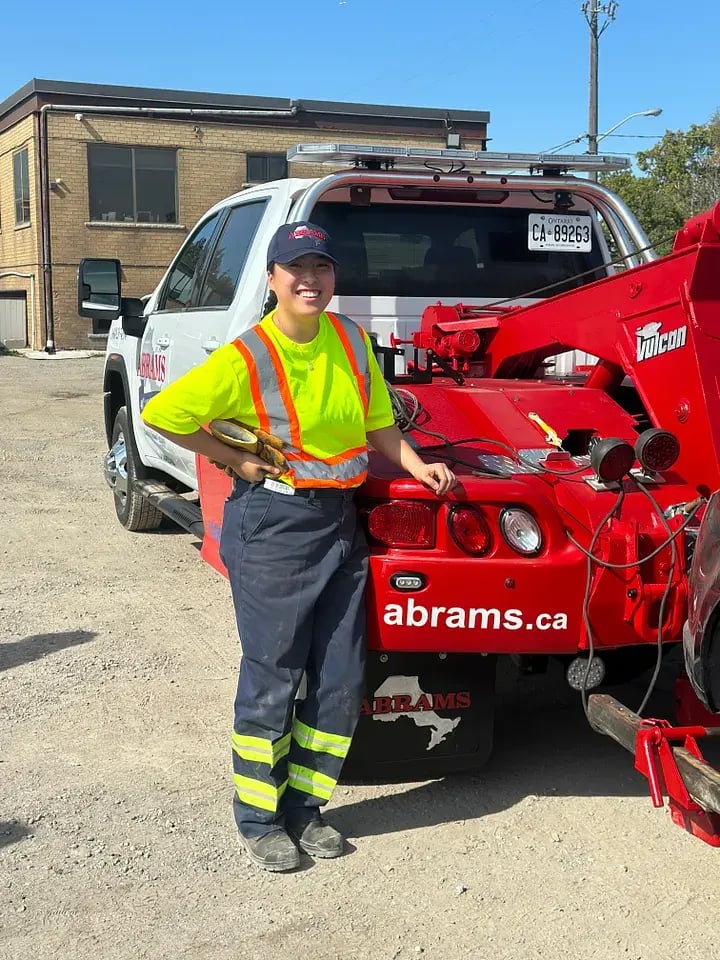
Working with Leon to flip a car back over
Towing is not just a job. It is not just a hook and some chains. It is planning, math, communication, and physical strength. It requires endurance and constant situational awareness. There are no easy days in this work, even if the people doing it make it look that way.
What we see from the outside is rarely the full picture. Behind every quick recovery is a long list of decisions, calculations, and careful movements. The people doing this work are not just drivers. They are problem-solvers and safety professionals.
To everyone out there working the roadways, doing things the right way, and taking pride in your craft, thank you. You make it look easy, even though most of the time it is not.

View Devon's LinkedIn Profile